Kaladin–Bridge Four relationship
The Way of KingsKaladin–Bridge Four relationship is central to Kaladin Stormblessed’s reinvention as a leader. What begins as the assignment of a condemned bridge crew becomes a bond built through protection, discipline, shared risk, and practical care. Bridge Four gives Kaladin a damaged group to organize; the men, in turn, become the first community in which his leadership is tested, resisted, and ultimately accepted.
Identity and Initial Power Structure
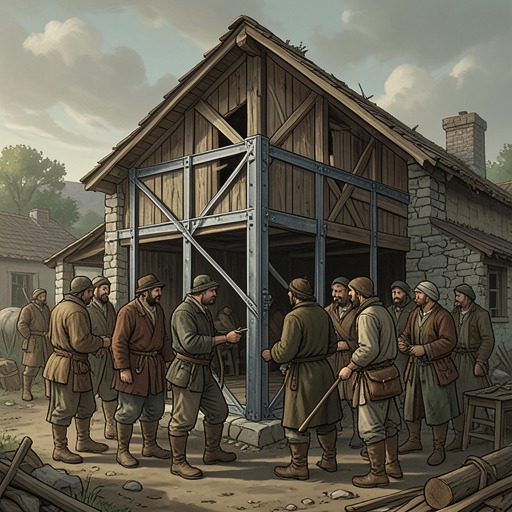
The relationship first takes shape within the brutal hierarchy of the bridge crews. Bridge Four is treated as expendable labor, and its men are expected to carry a bridge under fire rather than survive with dignity. Kaladin enters this system with the experience of a soldier and the bitterness of someone who has already been broken by betrayal and enslavement. He therefore approaches the crew not as an abstract military unit but as men trapped inside a structure designed to consume them.
Kaladin establishes his authority through Gaz, the bridge crew’s overseer. After forcing Gaz to listen, he tells him that they will begin again and insists that Bridge Four belongs to him: Gaz may assign tasks, but Kaladin is the bridgeleader because the previous leader died that day and a replacement is required. The exchange makes the relationship’s first condition unmistakable. Kaladin does not wait for institutional permission to protect the men; he seizes the narrow authority available to him and turns it against the system that has been using them.
Leadership Through Organization
Kaladin’s command becomes concrete the morning after he decides to fight again. He rises before the others, throws open the barracks door, and orders the men to get up and organize in the voice of the squadleader he once was. The command surprises even him, because it reveals that the disciplined fighter of his earlier life has not vanished completely. He understands that Kaladin Stormblessed is dead in one sense, but Kaladin Bridgeman can inherit that earlier man’s strength without pretending that the intervening scars do not exist.
The practical problem is severe. Bridge Four has thirty-four members, though its number fluctuates, and at least twenty-five men are needed to carry the bridge safely; even a crew larger than that can fail. Organization is therefore not cosmetic discipline. It is a condition of survival. Kaladin’s leadership begins by converting a room of exhausted, frightened men into a unit capable of acting together, making the bridge crew’s collective structure a direct challenge to the expectation that bridgemen should be disordered, replaceable, and doomed.
Care, Resistance, and Collective Responsibility
The relationship is not immediately affectionate or secure. Kaladin’s authority is imposed before it is trusted, and the men retain the habits produced by exploitation. This is especially clear when their wounded are denied food and pay until they recover. Kaladin explains that Highprince Torol Sadeas intends to make an example of them by demonstrating that bridgemen are not worth healing, allowing Hobber, Leyten, and Dabbid to die slowly. He asks the crew to pool resources, estimating that roughly two dozen clearmarks will be needed for medicine, supplies, and food.
The response is rejection rather than solidarity. Moash laughs, others join him, and the men disperse despite Kaladin’s warning that the next wounded man could be any one of them. Moash answers that he will die quickly in the field rather than slowly over a week in the camp. This moment exposes the psychological damage inflicted by the bridge system: the men have learned to regard survival as an individual improbability rather than a shared obligation. Kaladin’s appeal fails because the group has not yet become a community capable of imagining a future in which one man’s suffering matters to the others.
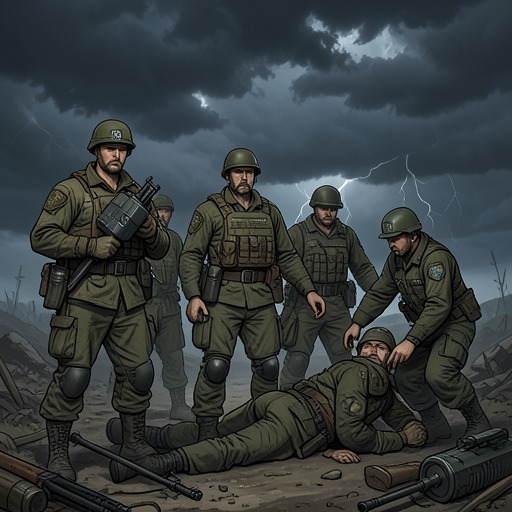
Yet the relationship changes through repeated shared experience. Kaladin later recognizes that his choices have also carried a cost. He thinks of the two hundred men who died and admits that he protected his own at the expense of others by acting too hastily. His leadership is therefore not presented as flawless rescue. The survival of Bridge Four is shadowed by responsibility for those beyond it, and the crew’s loyalty develops alongside Kaladin’s recognition that protecting one group can never erase the larger consequences of command.
Trust and the Reformed Bridge Four
By the time Dalinar Kholin gives Kaladin a new barracks for each bridge crew, the scale of Kaladin’s responsibility has expanded dramatically. He has never commanded more than twenty-five men, yet he is now faced with more than a thousand. Bridge Four’s barracks itself appears almost like a palace, furnished with a bunk and locking chest for every man, but its true significance lies outside: the men gather around a firepit while Rock cooks stew and Teft speaks quietly with an injured arm bandaged.
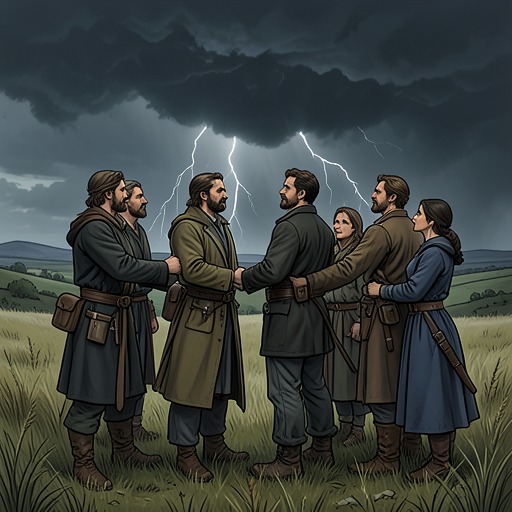
The gathering includes Shen, the quiet parshman recovered with the wounded from Torol Sadeas’s camp. Most of the men bear bandages, and their ragged condition makes them seem an unlikely choice for Dalinar’s bodyguards. Kaladin nevertheless agrees with Dalinar’s judgment. If he were placing his life in anyone’s hands, he would choose this group. The statement marks a decisive reversal in the relationship. Bridge Four is no longer merely the crew Kaladin commands; it is the group whose battered bodies, shared history, and demonstrated loyalty make them trustworthy companions in danger.
Change and Narrative Significance
Kaladin–Bridge Four relationship traces a movement from imposed hierarchy toward chosen solidarity. Kaladin begins by claiming command through threat and certainty, while the men initially respond with exhaustion, indifference, or open mockery. His authority becomes durable only as it is joined to concrete acts: organizing the crew, confronting the mechanisms that deny the wounded care, and accepting responsibility for the dead rather than treating survival as proof of personal righteousness.
Bridge Four changes in parallel. Its members remain wounded and vulnerable, but the firepit gathering presents them as a group with its own rhythms of cooking, listening, recovering, and waiting together. Their community is not created by sentimental agreement; it is forged against a system that denies their value. The relationship’s decisive achievement is thus not that Kaladin simply finds followers. It is that a condemned labor unit begins to function as a human collective, while Kaladin learns that leadership means making other people’s survival part of his own identity.